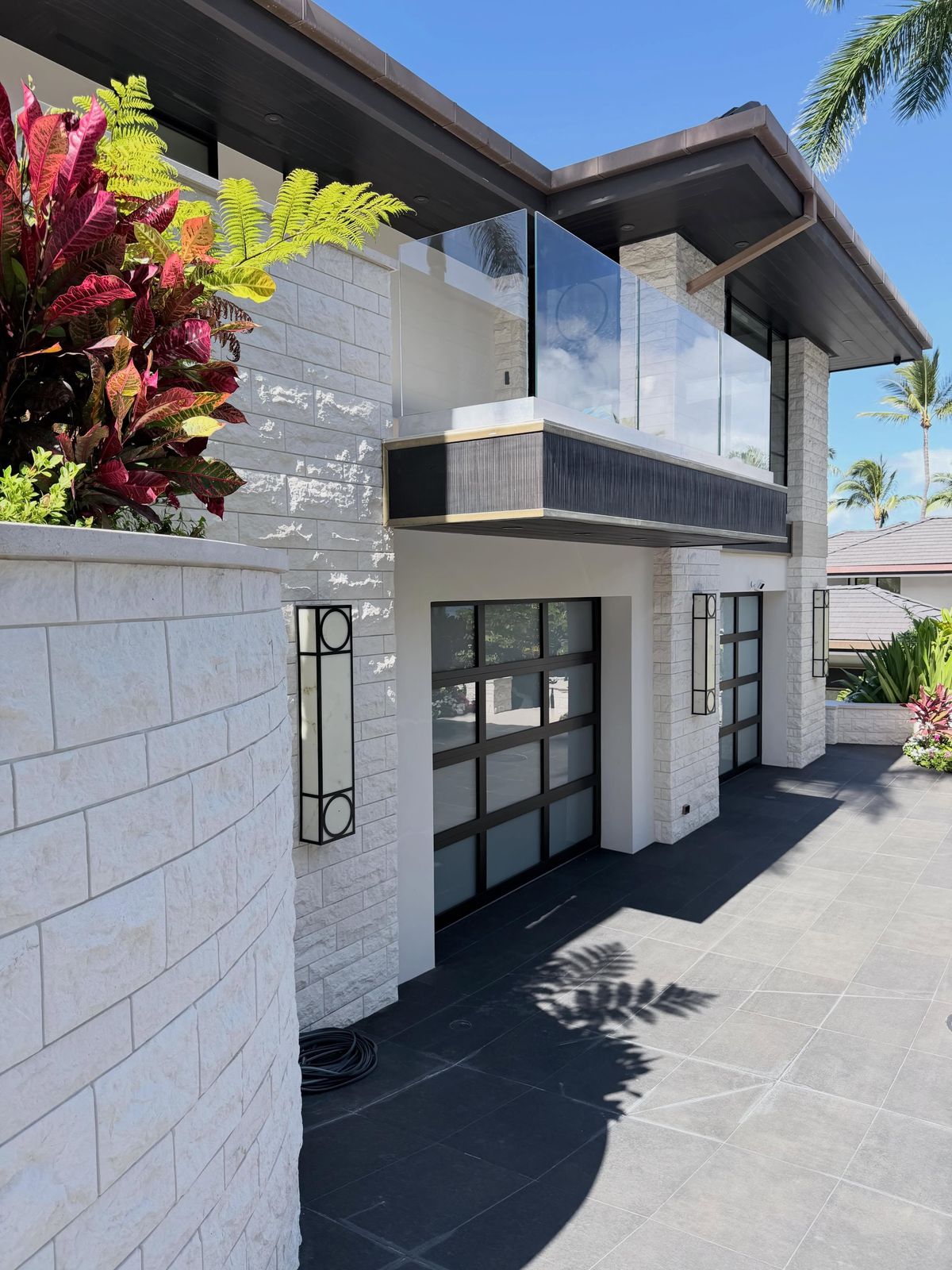
Stone · Maui, Hawaii
Volcanic stone is part of the Maui landscape. We bring it onto homes as stacked stone veneer, lava rock and basalt feature walls, columns, fireplaces and hearths — built to stay put through rain, sun and wind.
Stone · Maui, Hawaii
Volcanic stone is part of the Maui landscape. We bring it onto homes as stacked stone veneer, lava rock and basalt feature walls, columns, fireplaces and hearths — built to stay put through rain, sun and wind.
Dark lava rock and basalt have been used in Hawaiian walls and structures for generations, and they still look right against tropical planting, stucco and plaster. On a modern home, the same look is usually achieved with adhered stone veneer: thinner pieces of real stone, or manufactured stone, bonded to a prepared wall rather than built as a solid structural wall.
Veneer makes stone practical on columns, entry walls, chimneys, interior accent walls and the face of a lanai bar, without the weight and footings that full masonry would need. It also gives a lot of design freedom, from tight, dry-stacked ledgestone to the irregular, rugged face of natural lava rock.
Exterior stone veneer is only as reliable as the assembly under it. Wind-driven rain gets behind every cladding sooner or later, so on framed walls the veneer goes over a water-resistive barrier and metal lath, with a mortar scratch coat that the stone bonds to, and the bottom of the wall is detailed so moisture can drain out instead of soaking into framing. On concrete or block, the surface is cleaned and prepared so the mortar can grip.
Each stone is back-buttered and pressed into place for full contact. With heavy natural stone such as basalt, we pay close attention to piece size and setting technique so the veneer stays bonded. Joints are either tooled or kept dry-stacked for a mortarless look, depending on the style you want. Flashing at windows, roof lines and wall caps is coordinated so water is directed off the stone.
Fireplaces are especially at home Upcountry, where evenings in Kula, Makawao and Pukalani get cool, and on covered lanais where an outdoor fire extends the evening. Stone around a firebox has to respect the clearances and materials required by the fireplace or insert manufacturer and local code, so we work from those requirements and coordinate with whoever is installing the unit itself.
A stone surround can be paired with a plastered chimney breast in Venetian plaster or lime plaster, a polished marble or limestone hearth, or a tile face, so the fireplace ties in with the rest of the room.
We start with what the wall is made of, how it is exposed to weather, and what look you want. Stone samples laid out on site, in your light, help settle color and pattern before anything is ordered. For exterior work we also look at how stone meets stucco, windows and the ground, since those transitions are where good detailing shows. Projects in remote areas such as Hana need extra planning for stone deliveries.
Natural thin veneer is real stone cut to a thinner profile. Manufactured veneer is a cast product made to look like stone, generally lighter and more uniform. Both are installed over a properly prepared wall; we can show you samples of each.
Sometimes. It depends on what is under the finish and whether the wall can accept the added weight and the needed moisture detailing. We check the wall during the site visit before recommending an approach.
We build the stone, tile and plaster finishes around the fireplace. The firebox, insert or gas unit is installed by the appropriate trade, and we follow the manufacturer's clearance requirements for the finish materials.
Yes. Lava rock and basalt make striking interior accent walls and fireplace surrounds. Rough lava rock collects dust, so we talk through placement and sealing options.
It depends on scope: wall area and height, stone type, the condition of the substrate and the detailing involved. We provide a free on-site estimate with a written, itemized quote.