Stone · Maui, Hawaii
Laying rock is the oldest building trade in Hawaii and still one of the most visible. We build lava rock and basalt walls for entries, gardens and property lines across Maui, dry-stacked or mortared, and set to stay where they are put.
Stacked stone walls have marked land, held terraces and sheltered homes in Hawaii for many generations. The traditional craft of dry-stacking stone without mortar is known as uhau humu pōhaku, and walls built that way still stand all over Maui.
A rock wall on a modern property draws on the same idea: stone from the island, fitted by hand, sitting naturally against planting, stucco and plaster. Built well, it looks as if it came with the land.
A dry-stacked wall holds together through the fit and weight of the stones. Each rock is chosen and turned until it locks against its neighbors, the wall leans slightly into itself, and water drains straight through. It has the most traditional look and suits garden walls, terraces and low boundary walls.
A mortared wall is bonded with mortar, either visible in the joints or kept back out of sight for a dry-stacked appearance. It suits taller walls, entry walls with gates and lighting, columns, and walls that need a crisp, level top. We talk through both with you on site, because the right choice depends on the height, the ground and the look you want.
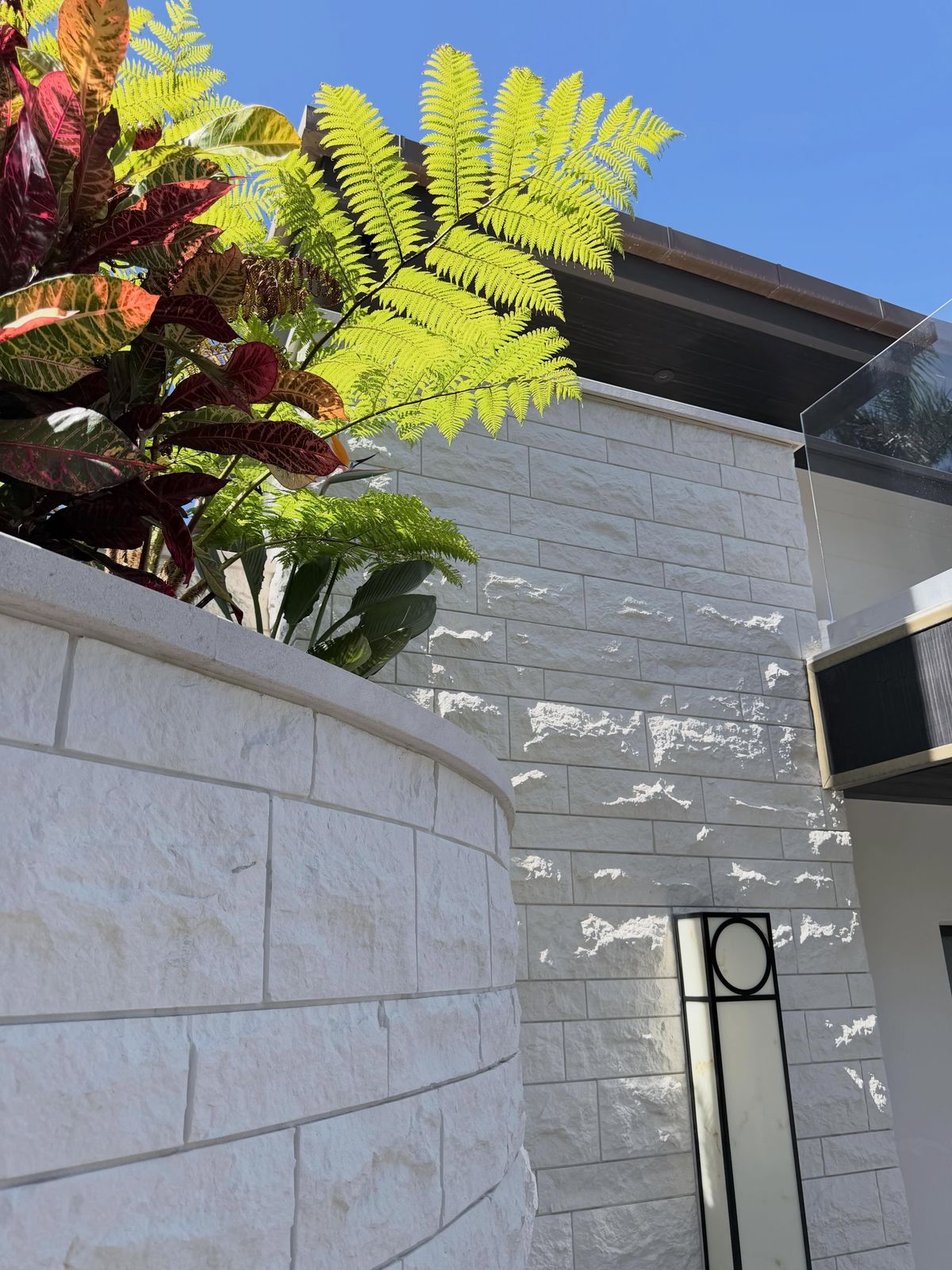
A rock wall fails from the bottom or from behind. It needs a firm, level base set below the surface, the largest stones at the bottom, and long stones that reach back into the wall to tie its faces together. A wall that holds back soil also needs somewhere for water to go, so we build in drainage rather than letting pressure build up behind the stone.
Height changes what a wall has to be. Low garden and boundary walls are straightforward. Taller walls, walls that retain a slope, and walls near a road, a property line or the shoreline can need engineering and permits. We tell you early if that applies to your wall and coordinate with whoever is designing it.
Most Maui walls are built from lava rock or dense basalt, often called blue rock, and from moss rock where a weathered, natural face is wanted. Color, size and shape all change the character of a wall: large, rough stones read as rustic, while tightly fitted, flatter stones look more formal.
We lay out sample stone on site, in your light, before anything is ordered, and when a wall is being extended or repaired we match the existing stone as closely as supply allows. Rock walls sit well beside paver patios and walkways and stucco exteriors. Remote sites such as Hana and steep Upcountry lots in Kula need extra planning for stone delivery.
Both last when they are built correctly. A dry-stacked wall drains freely and can shift slightly without cracking; a mortared wall is more rigid and suits taller or more formal walls. We recommend one or the other based on height, ground conditions and the look you want.
It depends on the wall's height, where it sits on the property and whether it holds back soil. We check what applies to your site before work starts and tell you if engineering or a permit is needed.
Yes. We rebuild fallen or leaning sections and extend existing walls, matching the stone and the style of the original as closely as available rock allows.
Yes. A sound block or concrete wall can be faced with lava rock or stone veneer, which gives the look of a rock wall on a wall that is already there.
It depends on the wall's length and height, the stone, access to the site and whether it is dry-stacked or mortared. We provide a free on-site estimate with a written, itemized quote.