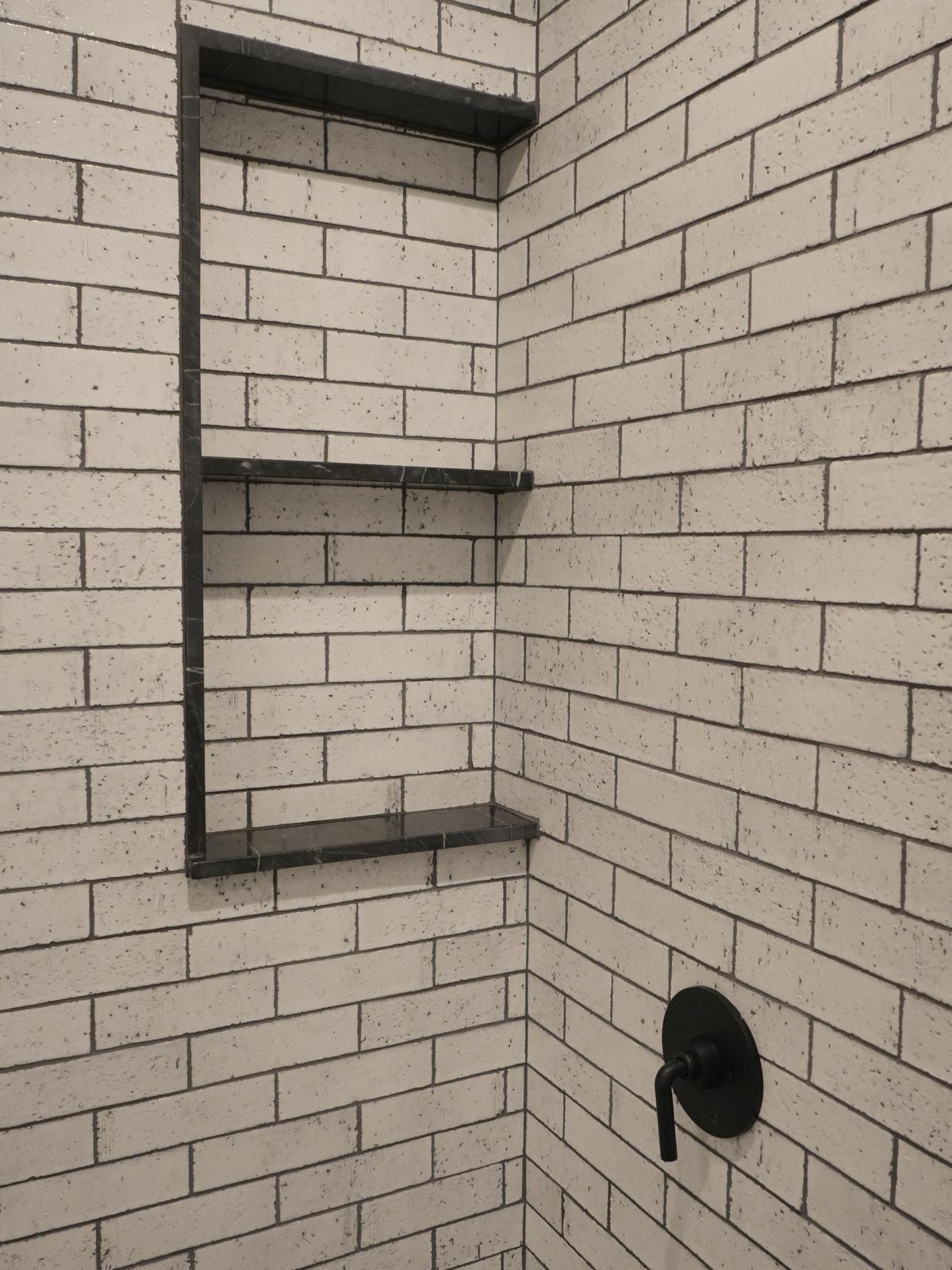
Stone · Maui, Hawaii
Every slab and tile of natural stone is a little different, and each type has its own rules. We install marble, travertine, limestone and basalt with methods matched to the stone itself.
Stone · Maui, Hawaii
Every slab and tile of natural stone is a little different, and each type has its own rules. We install marble, travertine, limestone and basalt with methods matched to the stone itself.
Porcelain is manufactured to be consistent: the same thickness, the same color and very low absorption. Natural stone is quarried, and it varies from piece to piece in veining, color, density and how readily it absorbs water. That variation is the reason people choose it, and it is also why stone takes more care to install.
Some stones are sensitive to moisture during installation and can stain, curl or show shadowing if set with the wrong mortar; certain green and dark marbles are well-known examples. Light-colored marbles can show discoloration through the stone if a gray mortar is used, so we use white setting materials where needed. Before we set a single piece, we look at the stone you have chosen, check the supplier's guidance, and select mortar, grout and sealer to suit it.
A polished finish brings out the color and depth of marble and gives it a mirror-like shine, but it can be slippery when wet and shows etching from acidic spills more readily. A honed finish is smooth and matte, more forgiving of daily wear, and generally a better choice for bathroom floors and kitchens. Tumbled, brushed or textured finishes add grip and an aged look that works well outdoors and on lanais.
Edge details matter too. Exposed stone edges on shower niches, curbs, steps and countertops-to-wall transitions can be eased, bullnosed or mitered so the stone looks solid rather than like a thin veneer.
Stone floors are often laid with narrow grout joints, which leaves little room to hide an uneven substrate. We flatten the floor first, back-butter each piece for full contact, and keep edges level with their neighbors. Our installation follows the TCNA Handbook, which covers natural stone along with ceramic and porcelain, together with the stone supplier's recommendations. Movement joints are placed just as they would be with any tile floor.
Where a client wants it, stone can be honed or polished after installation to even out small differences and produce a seamless surface.
Stone and island living go together well, as long as expectations are realistic. Sand underfoot can scratch polished surfaces, so mats at entries help. Citrus, vinegar, wine and many common cleaners can etch marble and limestone, so we recommend pH-neutral stone cleaners. Most stones benefit from a penetrating sealer that slows staining, and that sealer is renewed over time.
Stone pairs naturally with our other finishes — a marble floor in a room with Venetian plaster walls, a stone shower within a fully waterproofed bathroom, or a marble slab backsplash. For rugged basalt and lava rock on exterior walls and fireplaces, see our stone veneer and lava rock page.
It can be, with a properly waterproofed shower, a honed finish for the floor, regular sealing and gentle cleaners. Clients who want very low maintenance may prefer porcelain that looks like marble.
Travertine naturally has small holes and voids. Filled travertine has those voids filled at the factory for a smoother surface; unfilled travertine keeps them open for a more rustic look, which is common outdoors.
Either works. We can help you understand what to look for and how much overage to order, or install stone you have already selected from a supplier.
It depends on the stone, the sealer and how the area is used. Bathroom and kitchen stone typically needs resealing more often than a low-traffic wall. We give you care guidance for the specific stone at the end of the job.
It depends on scope: the type and format of stone, the area, substrate condition, edge work and finishing. We provide a free on-site estimate with a written, itemized quote.